Are Unions Enough?
This article is an adaptation of a video I originally published on my YouTube channel.
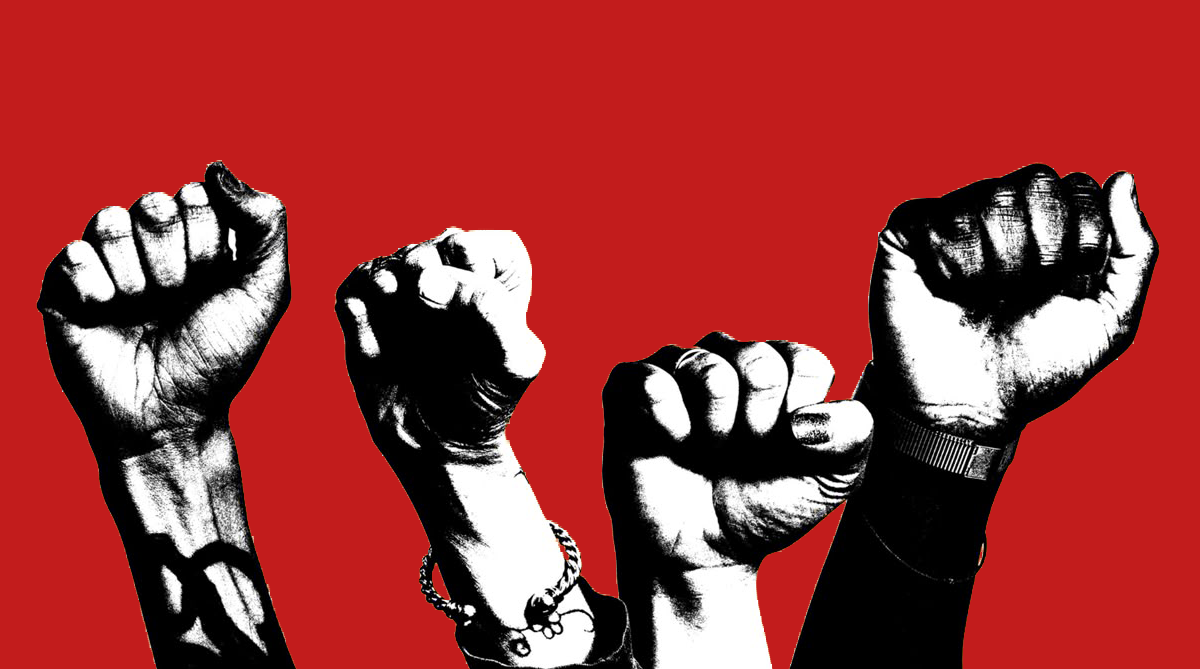
“Workers of the world unite, you have nothing to lose but your chains!”
Across two centuries and seven continents, this slogan served as a rallying cry against a social order that still dictates our lives. Have you ever stopped to think about how absurd this system is? It sucks to be working class. Everything revolves around serving the property and power of the ruling class. We have to sell our mental and physical abilities to those owners for a wage just so that we can pay them for our needs. We are the collateral to their power struggles, as different groups of rulers vie for advantage on the national and international stages. As workers, consumers, and citizens, we’re exploited, with no real say in our lives or societies.
There must be more to life than this.
Many of our forebearers understood the fundamental inhumanity of this system. Hence the famous slogan to “unite” and hence their efforts to put those words into practice through the formation of workers unions.
Yet here we are, decades later, still in the fire. Some have given up. Others are trying to improve their circumstances through education and networking. And others still are trying to escape the working class entirely, getting into entrepreneurship, crypto, or multi-level marketing.
Because let’s be honest: nobody really wants to be working class. By definition, it is the class of people that have to sell their labour to the ruling class for wages. Some workers are better off than others, but even the highest paid workers chafe against the experience of exploitation and emptiness that defines work in this day and age.
For workers of a world long-past, unions represented the promise of a better future. As organisations dedicated to working class interests, there was a time when they were champions of the masses, liberators-to-be, formidable forces that would nearly bring entire countries to their knees. They fought to improve working conditions, raise wages, claim benefits, reduce working hours, and more. Whatever rights we enjoy today are thanks to their sacrifice, often literally. In some places, they still persist in advancing the interests of sections of the working class. But from what I’ve observed, their once booming voice has become a whisper. Their mass mobilisation has retreated into passive bureaucracies. The gains they achieved in the past century are slowly being eroded by a ruling class more powerful than any other in human history. And whatever zeal unions once had for radical social transformation has since become disappointingly tepid.
My question is, do unions still represent the most effective way out of this system and toward a better one?
What Happened To Unions?
Before we determine what role unions may play in our struggle for a better future, we have to understand why they aren’t as prominent as they once were.
Deindustrialisation: Manufacturing industries have traditionally been the backbone of trade union movements, but many formerly industrial nations have since deindustrialised significantly and shifted to the service sector.
Globalisation: Thanks to globalisation, it’s become harder for unions to pressure their bosses due to the very real threat of their jobs being outsourced to “low-cost” countries.
Automation: Automation has also reduced the demand for employment in the manufacturing sector, while the tech jobs that automation tends to introduce are far more individualised.
Dispersion: Compared to factory work, where sometimes thousands of workers may share the same employer and conditions, the service jobs that have replaced them are more dispersed across workplaces and harder to organise.
Worker Identity: Many service workers don’t see themselves as part of a long-term “occupational community” in the same way that steelworkers or miners might. Such jobs often have high turnover rates. Keep in mind that some of the most organised unions in history formed where entire communities revolved around particular industries, creating ties of solidarity that extended beyond the workplace and throughout daily life. The labour landscape today pales in comparison.
Precarity: The rise of insecure work has left workers vulnerable and fearful of retaliation. Compared to decades past, employers have gotten even better at union busting. Temporary contracts, subcontracting arrangements, gig work, and working multiple part-time jobs tend to make it both legally and logistically challenging to actually organise with your fellow workers.
Legal Challenges: Workers that are classified as “contractors” don’t have as many legal protections, and may not even legally be able to form unions, bargain collectively, or go on strike. The limits of legality in some places may also prevent actions like sympathy strikes, or strikes in certain sectors.
Despite their constraints, unions are recognised as vital advocates for the workers they represent. But that doesn’t mean they’re above critique.
The Problems with Unions
For all the nostalgia we may have about their revolutionary past, the vast majority of unions are far from revolutionary. Generally speaking, unions are firmly integrated within the system. In some parts of the world, including my own, unions explicitly align themselves with political parties and ruling governments. Union membership may even be mandated by law in certain sectors as a condition of employment.
Capitalists don’t need to fear unions because they’ve been successfully domesticated. Rather than fighting to unseat the powerbrokers of society by organising workers to take control of their collective force, unions mostly try to negotiate with capital. Their grandest ambitions are limited to short-term wins, not a fundamental rearrangement of power. “A fair day’s wages for a fair day’s work,” rather than the abolition of the wage system. Unions are burdened by bureaucracy because their focus is on negotiating the price of labour within the confines of the law. This generates a specialised class of negotiators, separate from a passive mass of workers, that ultimately seek a form of class collaboration which maintains the system and holds back workers’ liberation. Once contracts are signed, unions will press both employers and employees into observing its stipulations. If, for example, the contract has a no-strike clause, the union won’t stand with striking workers. This isn’t to say that negotiation may never be necessary over the course of revolution, but being entirely oriented toward negotiation and accepting the premise of this system’s legitimacy is what gives unions their reformist character.
Where workers do decide to act independently of the union apparatus, they’ve often faced condemnation from those leaders. Wildcat recounts one such example during the 1984–85 UK miners’ strike, where the Yorkshire chapter of the mineworkers’ union revoked its minibuses from a group of miners to prevent them from picketing. Union reps also tend to oppose illegal yet potent forms of direct action like sabotage and theft.
This hierarchy within unions both follows from and reinforces the broader hierarchical system. But it isn’t the only division upheld by unions: separations between skilled and unskilled; manual and mental; and citizen and foreign workers also serve to maintain the status quo. And unless they have an explicitly anti-imperialist orientation, unions in countries like the US end up furthering the economic and foreign policy interests of their country to the detriment of other workers.
There have been exceptions to the rule of unions divided by profession and national borders, like the Industrial Workers of the World or IWW, but it too suffers from the limits of negotiation within the system, as well as other issues that continue to plague its organisation. However, there have been times in the IWW’s history where it aimed to advance an alternative direction for worker organisation, heavily influenced by the school of thought which we’ll be exploring next: anarcho-syndicalism.
What is Anarcho Syndicalism?
Anarcho-syndicalism is a methodology for organising social revolution through unions with the ultimate goal of achieving anarchy. Anarchism is the philosophy and practice that opposes all hierarchy and authority while proposing anarchy, a world without rule where autonomy, mutuality, and free association form the basis of our society. Anarcho-syndicalism doesn’t depart from these foundational principles of anarchy, it simply emphasises a particular strategy for achieving its aims.
According to anarchist Rudolf Rocker, the syndicalists seek the stateless collective ownership of land, tools, and resources; the organisation of economic activity through free agreements; the abolition of national borders which divide workers; and direct action toward the abolition of the wage system via a general strike of workers across industries. Their tactics include unions, but also involve education, sabotage, and armed resistance. By wielding unions as “economic fighting organisations” federated across professions and regions, syndicalists aim to sow the seeds for the society of the future.
It is sometimes said that anarcho-syndicalism isn’t relevant anymore. From its heyday in the early 20th century, when it shaped the course of countries across Europe and Latin America, conditions have changed significantly. Anarcho-syndicalism has since retreated to the margins of both the labour movement and the anarchist movement. Despite some anarchist efforts to transform them from within, unions have been overtaken by class collaborationism. And the anarchist movement nowadays has a more diverse focus than ever, including but also beyond the workplace.
Now, whether anarcho-syndicalism is or is not still viable as a strategy depends on how it evolves with the times, but the basic project of organising workers remains just as relevant as ever.
Beyond the Limits of Anarcho-Syndicalism
However, if our goal is anarchy, it’s worth considering how far a syndicalist approach will take us.
Perhaps the most obvious potential limit is its very focus; syndicalism places emphasis on radical unions within workplaces. To be clear, historical anarchist syndicalists didn’t exclusively organise in workplaces. Since their focus was on organising as many people as possible, including those overlooked by traditional unions, they made efforts to involve domestic workers and the unemployed. The syndicalist strategy can be limiting if you don’t take its struggle beyond the typical offices, stores, and factories, especially in our increasingly diverse labour landscape.
But much of that landscape is defined by meaningless, impermanent, and even destructive work. The kinds of work that anthropologist David Graeber describes in Bullshit Jobs (2018). The kinds of work that have you flitting from gig to gig and contract to contract with no permanent workplace or commitment to anything besides paying your bills. The kinds of work that contribute to the wasteful excesses of our consumerist society. Meanwhile, the work that’s necessary to restore our planet isn’t profitable, so very little of it is being done.
We spend countless hours generating ads, spreadsheets, and plastic junk while our oceans are acidifying and our biodiversity is declining. There is a world beyond the glass desperately in need of change while we sit at our desks, kiosks, and workstations. There is art to be made, joy to be had, real needs to be met, while a significant portion of the existing workforce is busy creating value for shareholders. Even if we do manage to seize these sorts of workplaces, our focus shouldn’t be on merely shifting them into collective hands. Some of these operations need to be dismantled entirely, taking whatever goods they gatekeep behind private property and putting them toward more useful ends.
Of course, this can only be accomplished if people are no longer tied to their jobs. So beyond workplace organising, we need to establish commons: in land, housing, energy, food, clothing, and healthcare to ensure that we can meet people’s irreducible minimum needs and free them from the trap of dependence on pointless, profit-driven work. We need to simultaneously organise people in their workplaces to place the means of production in common hands and reclaim the commons so that people are no longer entirely dependent on their work for survival. Radical unions in capitalist workplaces may be tools to that end, but they are not in themselves the foundation of our future.
Though we must consciously identify our role as workers in this system as a first step in consciousness, we are more than our role as workers. Nobody wants to be mere workers. Our liberation will only be achieved through the self-abolition of the working class.
Nobody Wants To Be “Working Class”
I believe the author Chris Carlsson put it brilliantly when he said:
“When we go beyond our shrunken status as mere workers, our ability to create an abundant, shared life opens up; when we define ourselves as workers, we have already in some meaningful way lost the battle to the logic of capital. Defining ourselves as workers is to accept a definition imposed by capital that reduces us from our full humanity to an alienated seller of our creative possibilities.”
In an article by Ecuadorian collective Proletarios Revolucionarios, they highlight this need to break away from the imposed limits of proletarian or working class identity. We don’t need to reduce ourselves to negotiating with the powers that be for inches of progress:
“Indeed, because in the end it’s not a matter of taking pride in being a proletarian and fighting for a ‘proletarian society,’ and even less for a ‘proletarian State.’ On the contrary, it’s a matter of assuming the fact of being a proletarian as a condition that is socially and historically imposed, as the modern slavery from which one must liberate themself collectively and radically. It’s a matter of ceasing to be an exploited and oppressed class once and for all, eliminating the conditions that make the existence of social classes possible.”
This is what underpins anarchist social revolution, not as some magical overnight instance of utopia, but as an ongoing process of practicing and expanding anarchy. Our projects must extend into the space and time that is currently consumed by working to reproduce the system. As long as our efforts are limited to struggles within the system, we cannot break free. As long as all our time and energy is poured into working to eat, pay rent, and meet other basic needs, we cannot break free. Without building an alternative in production and distribution, projects that can actually meet people’s daily needs, our collective force will continue to be poured into the maintenance of the system, with all that entails. In times when people are struggling to find jobs, where there is a growing surplus of workers made obsolete and thus unable to survive, we need to fill that gap.
What will it take for our soup kitchens and food banks to be sustained by collectively organised farms instead of donations and grocery stores?
How can we seize or build housing that will free people from the burden of paying for shelter?
Can we create our own grids based on renewable energy so that we’re not dependent on the state to meet our energy needs?
In what areas can radical unions intercede to expand our projects by claiming their workplaces?
What steps do we need to take to go from being full-time workers to part-time workers to full-time revolutionaries?
Nobody wants to be working class, but that doesn’t mean we’re “lazy.” We may appreciate leisure, and crave it more desperately than ever under these exploitative conditions. But humans have always found joy and pride in meaningful labour. Centuries of labour-saving technologies should have enabled us to devote more of our time and energy toward such pursuits. Our finite needs—food, water, shelter—could be easily met. Yet we still live as though we’re on the brink of scarcity. Unfortunately, our economic system has determined that rather than working less and enjoying more, we must work more to produce more. There is work to be done, but it’s not the kind of work filled by “creating more jobs.” Paying people to dig holes and fill them back up might create jobs and increase GDP, but I’d rather live in a world where people didn’t have to “get a job” to live and could pursue things not valued by the almighty dollar.
There is art to be made, joy to be had, real needs to be met, while a significant portion of the existing workforce is busy creating value for shareholders.
Sure, there will always be necessary work. Not everything can or should be automated. It’s a common refrain that “someone has to pick up the trash.” But even the so-called degrading work of trash collecting, toilet cleaning, and so on doesn’t have to be done in the way we do now. Sometimes, in moderation, that sort of routine labour can even be therapeutic. However, no human being should be reduced to being a cleaner. You should be able to do one thing today and another tomorrow if you wish, to clean in the morning, build tables in the afternoon, cook in the evening, paint after dinner, without ever becoming a cleaner, carpenter, cook, or painter.
Art by Sean Bodley
This is the world of freedom that anarchists aim to create.
Because we’re a social species, when systems of authority dominate, we have to go along with authority in order to survive. Our collective force, which is the outcome of our cooperation that exceeds the simple sum of our individual contributions, is claimed and exploited by those in power, capitalists and government. Anarchy seeks to liberate our collective force from that exploitation. What anarchy does differently is ensure that our relationships are based on mutual freedom and responsibility instead of authority.
In anarchy, one of the founding principles is free association. Individuals are free to form and join groupings of equals based on their shared interests, needs, and desires. These groups will naturally come into conversation and free agreement with other groups to further their goals. This may include but indeed goes beyond the work groups of syndicalism; free association is the process that forms supply chains, hobby groups, sports teams, cultural institutions, consultative networks, scientific associations, libraries of things, and much, much more. When groups or individuals have conflicting interests, they must solve their disagreement through some sort of negotiation, mediation, or compromise, since no individual or grouping is more privileged than any other. The social fabric is thus comprised of multiple overlapping and divergent groupings, with a single individual being part of a multiplicity of collectives to pursue their interests and goals.
Here and now, we can take steps toward this freedom wherever we find ourselves. Spaces of encounter are the sites where people find and connect with others of common and differing interests through free association. So your workplace might serve as a space of encounter, or your school, or library, or living room. There you can invite discussion of your shared needs, interests, and ideas for solutions. See how those interests can be brought into conversation with other spaces, organisations, and projects to strengthen the ties of solidarity and advance your goals.
I can’t speak to every specific circumstance, nor could I provide solutions to every unique question or issue. I still have open questions. But my hope is that with the knowledge I have shared of our limits and possibilities, we can make bolder advances toward our freedom.
All power to all the people.
Peace.