Why Should We Care About Diversity?
This article is an adaptation of a video I originally published on my YouTube channel.
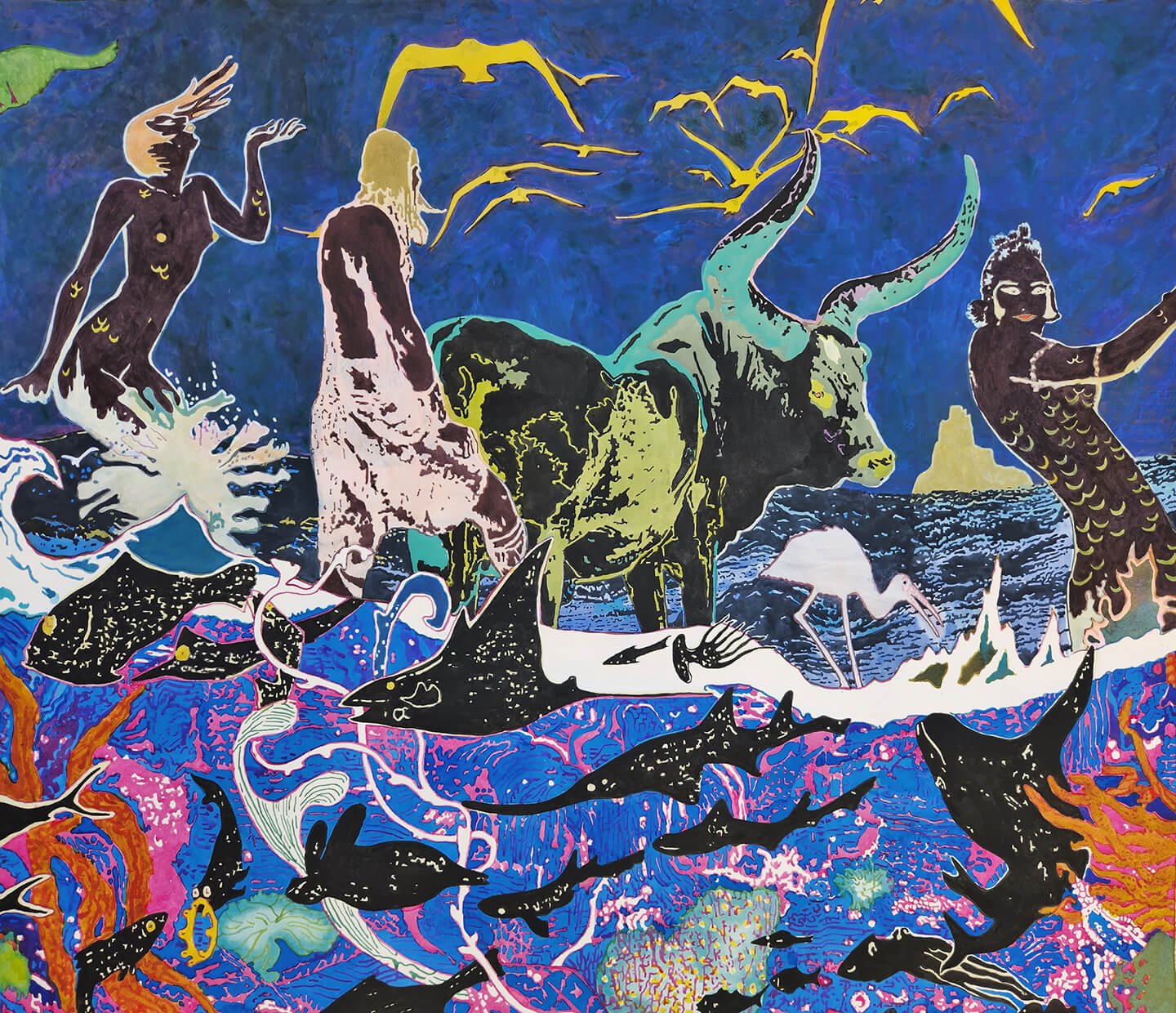
Art by Aaron Morse
We are in the midst of a mass death.
Not solely of people—though genocide continues to stain our history and present—but of biocultural diversity itself. A sixth mass extinction of species is underway, this time driven by human activity. Thousands of languages are now the “talking dead.” Entire cultures have been erased or assimilated into a select few monocultures. And while all of this is happening, we face a political backlash against “DEI”, or diversity, equity, and inclusion. Everything from demographic shifts through immigration to representation in the media has faced increasing ire. And as a consequence, reactionary attitudes have seemingly gained prominence.
But why should anyone care about diversity anyway? Whether we’re talking about species, languages, cultures, or anything else, why should diversity be treated as a value in itself?
First, let’s define diversity: the quality or condition of having or being composed of differing elements. On an ecological level, diversity manifests in the uncountable quantity of species and ecosystems. Biodiversity encompasses variance on every scale, from the genetics of a single species to the many species in a single community to the many communities that form the many ecosystems of the world. On a human level specifically, our diversity boggles the mind. The breadth of our genetic diversity is most pronounced in the motherland of Africa, but everything—blood types, nose shapes, hair textures, heights—is subject to variation across our transcontinental species. Human diversity further manifests through variation in age, ability, gender, and sexuality. But homo sapiens—the wise human—expresses its wisdom best through the sheer vastness of cultural diversity: all the different ways we behave, think, communicate, create, and organise. I’m talking about architecture, literature, music, storytelling, fashion, recreational activities, diet, and more. Cultural diversity can also encompass identification on the basis of ethnicity, religion, kinship, and other affiliations. There’s so much to culture beyond the surface, and I’ve only touched on some of it in my previous video on the subject.
As I referenced in that video, David Price’s Atlas of World Cultures (1990) records over 3,814 distinct cultures having been described by anthropologists, and it is most certainly a vast underestimate of all the cultures that exist and have ever existed. Especially when you consider the amount of languages that exist, which is perhaps our best approximation for quantifying just one dimension of cultural diversity. The 29th edition of Ethnologue: Languages of the World features 7,170 known living languages.
In In Light of Our Differences (2002), author David Harmon integrates these descriptions of biological and cultural diversity with the concept of biocultural diversity. This is, in his words:
“...nothing less than the entire complement of biological and cultural diversity now existing, bestowed upon Earth by millions of years of evolution. Biologically, it has shaped the species Homo sapiens; culturally (and spiritually, if you like) it is the foundation of what it means to be human.”
And yet, tragically, much of this biocultural diversity is being lost.
When it comes to species loss, the scale is difficult to determine. We are likely undercounting the amount of species lost, because we can hardly count the number of species that currently exist or have ever existed. But whether the number of species extinctions numbers in the hundreds or hundreds of thousands each year, it’s a massive loss either way. Especially when you account for the key role certain species play in their ecosystems. The loss of one can set off a chain reaction leading to the total collapse of the whole. And by the time we realise that a critical species is set to go extinct, it may just be too late to do anything about it. There’s always a delay between the time a species falls below its minimum viable population size and the death of its final individual.
The same rings true for languages. Of the over 7,000 living languages, roughly 44% are now endangered, some with fewer than 1,000 speakers remaining, some with fewer than ten. The 23 most spoken mother tongues in the world account for some 4.1 billion people. And the 200 most spoken mother tongues account for over 88% of humans on earth. Sadly, on every continent, indigenous and regional languages are facing an extinction crisis, in some cases accelerated by the efforts of governments that are actively hostile to minority languages.
With each passing year, we are losing not only our fellow species, but also our heritage as a human race.
How has this come to be?
Humans did drive species to extinction prior to modern history, but on a significantly smaller scale and far more dispersed by time and place compared to today. The rise of agriculture did not inevitably doom biodiversity—as there are ways to enhance biodiversity on a local level through practices like permaculture—but the widespread domestication of plants and animals paved the way for the monocultures and pasturelands that have devastated natural variety. Combined with the rampant spread of invasive species, global climate change, and habitat loss due to agriculture and urbanisation, these past few centuries since the dawn of the colonial-industrial era have seen a precipitous decline in biodiversity.
On the cultural diversity front, the causes of loss are many. Among them you have the genocides carried out by colonial powers over the centuries, the rise of the nation state model with its erasure of minority groups, and the homogenising force of globalisation as driven by international capitalism. Advocates of capitalism claim that it provides a diversity of choice, but its version of diversity is shallow and limited to consumerism. Being able to choose between streaming services or brands of toilet paper is a pale shadow of the rich depths of cultural diversity. But for the capitalists, as author Benjamin Barber put it, “Variety means at best someone else’s product or someone else’s profit, but cannot be permitted to become no product at all and thus no profit for anyone.” The capitalist tendency is toward a global monoculture of consumerism. Capitalist and statist interests have converged on the valuation of uniformity and devaluation of true variety for the sake of commerce. Consumers in Geneva, Guadalajara, Glasgow, Guangzhou, and Giza must all eat the same Big Macs, drink the same Coca Cola, drive the same cars, and wear the same jeans. In Harmon’s words:
“Global monoculture dictates English lawns in the desert, business suits in Indonesia, orange juice in Siberia, and hamburgers in New Delhi. It overwhelms local cultures and ‘develops’ them regardless of the effects on cultural coherency or capacities of local ecosystems.”
The rich and unique texture of each place is either sanded down or commodified for the sake of consumption. Through the spread of colonialism and capitalism, much of our diverse cultural heritage has been subsumed.
The Value of Diversity
But why does any of this matter? What’s the value of diversity?
From an ecological standpoint, diversity is essential for the survival of life as we know it. In fact, in Harmon’s words, diversity is “the very reason our planet can be said to be ‘alive’ at all.” In The Serviceberry (2024), botanist Robin Wall Kimmerer describes how diverse specialisation in the process of natural selection avoids scarcity and needless competition:
“[S]ince competition reduces the carrying capacity for all concerned, natural selection favors those who can avoid competition. Oftentimes this avoidance is achieved by shifting one’s needs away from whatever is in short supply, as though evolution were suggesting ‘If there’s not enough of what you want, then want something else.’”
Less diversity means less resilience. To borrow the example used in Ishmael (1992) by author Daniel Quinn, a global community consisting of nothing but rice and humans would be dangerously fragile. The estimated millions to billions of species that exist right now are worth preserving because that diversity carries the key to the resilience of life itself.
Speaking of resilience, herd immunity happens when enough people in a community are protected—usually through vaccines or past infection—so that a disease can’t easily spread. This protection also helps shield those who aren’t immune. But alongside herd immunity, genetic diversity adds another layer of resilience. So from an epidemiological perspective, diversity is critical. When people’s immune systems vary, it’s much harder for a single germ to infect everyone in the same way.
From a coldly utilitarian standpoint, the extinction of species and cultures deprives us of their utility in ways we may not fully appreciate until it’s too late. There was one story Harmon recounted that really stuck with me. It was about a young Indigenous father who walked for hours to a health clinic carrying his diarrhea-stricken infant daughter to get her potentially life-saving treatment. And yet, growing right from the ground of his native land was an herb that would easily treat her ailment, if only that knowledge had not been lost to him. Sometimes the knowledge is lost, but the species remains. Other times the species is lost, but the knowledge remains. The intertwined loss of countless species and indigenous cultures deprives those left behind of their unique and irreplaceable contributions to the community of life.
From a creative standpoint, diversity enriches our experience of the world. A world of varied colours, textures, forms, and experiences is far more engaging than one of monotony. Diversity is a vast reservoir of creativity, not solely of the arts, but also of problem solving. If diversity is diminished, then the breadth of our creative possibilities is also diminished. The less natural and cultural diversity we’re exposed to, the less we have to build upon and the less we are capable of expanding diversity. As Harmon warns:
“As more and more of the collective cultural-psychological space of the world’s peoples is taken up with narrower and narrower mental constructs, ‘monocultures of the mind,’ as Vandana Shiva calls them, there will be less and less capacity to generate alternative constructs.”
Of course, even if our world becomes significantly less diverse, we will not entirely lose our capacity to create and innovate. But most of the population spends their days tied to wage labour, generating profit for the ruling class. Few are afforded the time to create and innovate. Without dramatic social change, it will take centuries if not millennia to make up for what has been lost.
Finally, from a standpoint of gratitude, we were lucky enough to be born into a world with such variety, such a richness of choices and experiences that make freedom possible. This biocultural gift should be valued, not mistreated.
Cognitive Diversity
But there’s another dimension to diversity related to the biocultural focus I’ve taken so far. One that is just as worthy of appreciation.
Cognitive diversity is the presence of differences in how people think. Social scientist Scott E. Page explored the concept extensively in The Difference (2008), where he identified the four key components of cognitive diversity:
Diverse perspectives, as in different ways of looking at a problem or situation.
Diverse interpretations, which are different ways of categorising information.
Diverse heuristics, as in different problem solving tools and strategies.
And finally, diverse predictive models—the different methods we use to predict outcomes.
Combined, these form the various cognitive toolboxes that individuals bring to the table.
It’s no surprise that we find such cognitive variety in the human population. After all, diversity has been the environment in which the human mind emerged and the very means through which consciousness operates, at least according to philosopher William James.
As Page demonstrates throughout his work, cognitively diverse groups often outperform brilliant but intellectually homogenous groups, especially when it comes to creativity, complex problem solving, and prediction making. There is a caveat of course, which is that cognitive diversity may slow decision-making and cause friction. That’s why it’s best utilised for complex, disjunctive tasks rather than routine, conjunctive tasks. Disjunctive tasks are those in which only one person needs to succeed for the group to be successful, so diversity works best because multiple approaches can be tried at the same time. Conjunctive tasks are those in which everyone’s contribution is critical, so smooth cooperation is key. In other words, cognitive diversity may be great for innovation, but not necessary for assembly lines or sports teams. If we’re looking to improve society somewhat, that requires innovative problem solving, which means we need to ensure that we’re creating spaces that value and encourage cognitive diversity.
To do so, we must embrace the other dimensions of human diversity. Page’s main focus is on cognitive diversity, but he also highlights the correlation between cognitive diversity and what he calls identity diversity. People with different backgrounds, life experiences, and so on are more likely to see the world differently and develop different cognitive tools than people who share the same or similar backgrounds and life experiences. This makes identity diverse groups more likely to possess cognitive diversity and thus more capable of solving the problems that are best suited to cognitive diversity. Prejudice is an unfortunate obstacle to our ability to harness this strength for our collective benefit, leading to worse outcomes instead of better ones, but it can be overcome.
Speaking of obstacles, preference diversity is an aspect of cognitive diversity that tends to bring the most conflict. There are two forms that preference diversity can take: differences in instrumental preferences and differences in fundamental preferences. Instrumental preferences are about how we get what we want. We might have the same goal of physical fitness, but I’m a bodybuilding guy and you prefer calisthenics. We might both need to satisfy our hunger but I prefer doubles and you prefer tacos. We have different means, but the same ends. Fundamental preferences are about the goals themselves. You might prioritise economic growth, while I prioritise improved quality of life. You might want to establish a party dictatorship, while I’m trying to establish an anarchist society. So we have different means and different ends. Page spends some time on the ways that differences in means and ends can cause problems in conventional organisations and democratic systems.
Anarchy and Diversity
This is why when I talk about how anarchy works, I make sure to emphasise free association; that organisations in anarchy are formed by individuals who share common interests. Expecting people with entirely different goals—with fundamental preference diversity—to necessarily group together and decide on a common direction just creates unnecessary gridlock. We may be neighbours, but we don’t have to decide about everything together. If some friends and I want to go to the beach and you and your friends want to go to the river, we can go our separate ways (or simply alternate where we all go each weekend). A carpenter doesn’t have to sit through a meeting about road maintenance if they don’t share that interest.
Where instrumental preferences are concerned, sometimes our instrumental preferences are initially in conflict, but we might be able to find a compromise or a solution that satisfies everyone. You want the window open because you want breeze, I want the window closed because I’m tired of these mosquitoes, we both want to be comfortable, so we install a screen. But sometimes differences in instrumental preferences end up being the basis of new groupings, as each person or group is free to pursue their means of doing things. After all, in anarchy, the ability to do anything is proportional to how many people are willing to do it. And it can be useful to have different approaches or means of achieving the same ends. Imagine, for example, a network of groups with the shared goal of providing food, but different ways of producing that food, such as permaculture or hydroponics. Or, for a smaller scale example, we might all want to go to the beach, but you and your friends prefer to drive there and my friends and I prefer to take a sailboat. We’ll all get there eventually.
Of course, some conflict may be unavoidable. Some fundamental differences in goals are mutually exclusive and cannot coexist. Some cognitive toolboxes are hostile, hateful, or destructive. Sometimes compromise must be found. Sometimes compromise can’t be found. These are challenges we may always have to navigate.
It’s “easy” to simplify and sweep aside social complexities for the sake of “hierarchical efficiency.” The beauty of anarchy, in my eyes, lies in its ability to embrace diversity in all of its forms and navigate the conflicts that may arise from it without defaulting to domination. Anarchism doesn’t claim to have the solution to every problem, but it aims to create an environment where solutions can flourish without the rigid obstacles of hierarchy. Anarchy is a goal and an ongoing struggle; of a world against authority where autonomy, mutuality, and free association form the basis of our society. In the words of Margaret Killjoy, “Rather than force ourselves to sing in unison, we ought learn to harmonize.”
I appreciate diversity in ecology, culture, lifestyle, identity, and thought. I see how hierarchical systems like capitalism, statism, and patriarchy end up threatening that diversity. I believe that anarchy will allow a wider range of ways of being to flourish without the constraints of authority.
And in case it wasn’t clear, let me make it explicit: valuing diversity does not mean passively accepting the many varieties of suffering, exploitation, and domination that currently exist. It doesn’t mean being a cultural relativist who will turn a blind eye to cultural “quirks” that are blatantly destructive. I can appreciate diversity as a principle while still opposing certain manifestations of it, whether deadly viruses, honour killings, patriarchy, or genital mutilation. I retain my right to make value judgements, even while accepting no absolutist ethics.
With all of that said, you should be able to understand where I’m coming from when I say that diversity is good and we should care about it. Whether we’re speaking ecologically, culturally, cognitively, or beyond, diversity is a value in itself worth cherishing. It is not only crucial to human freedom, but to life itself.
I understand that extinction has always been part of the story of life. No species lasts forever. No culture lasts forever. In some cases, extinction may even be considered a good, such as in the case of smallpox. Still, we must disrupt the speed and scale of destructive change, driven by human activity under capitalism and statism, that is creating our current biocultural extinction crisis. We must slow the steady expanse of concrete and cultural imperialism. We can’t—and perhaps shouldn’t—prevent every extinction, but we should be doing everything in our power to preserve as much biocultural diversity as possible.
We have already lost so much and we are poised to lose even more in the coming years. The decisions we make today will determine the face of our planet in the future. I want that face to be one of many faces and many voices, human and non-human.
All power to all the people.
Peace.