Building Infrastructure in Anarchy
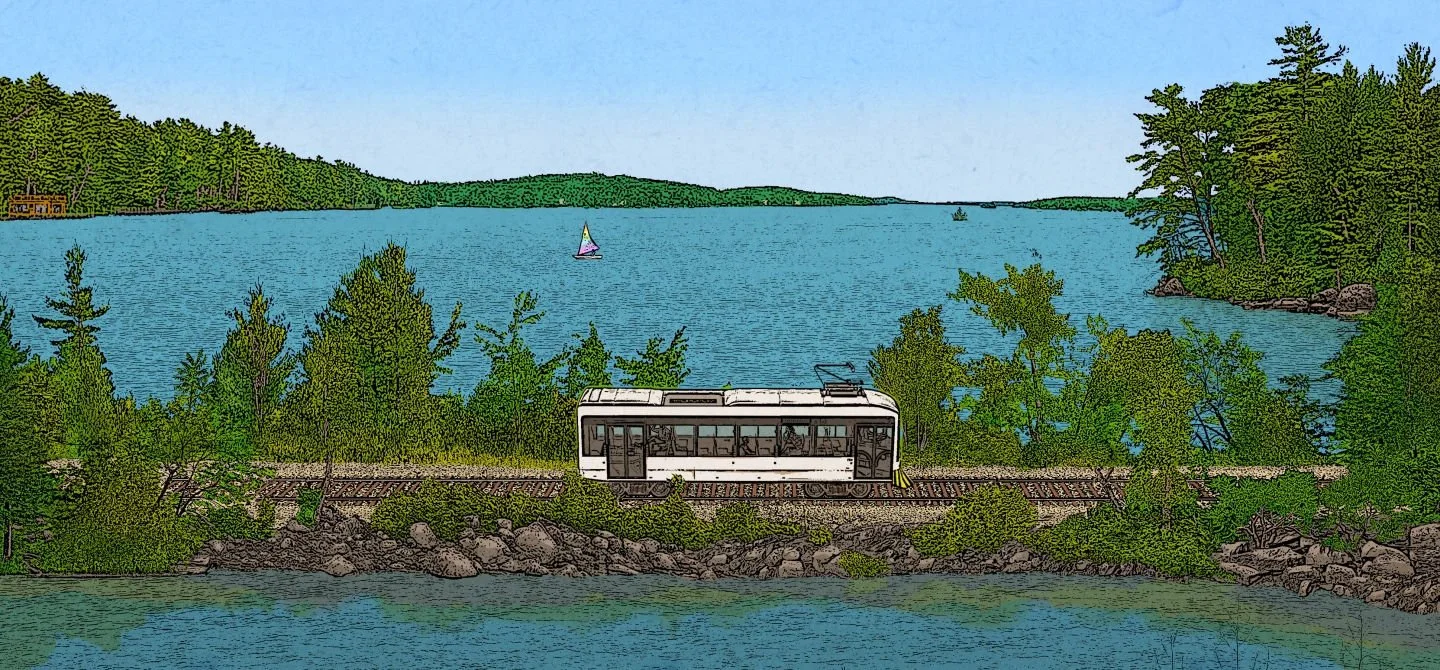
Art by Jacob Coffin on Story Seed Library
Q: How would infrastructure get built and maintained in an anarchist society?
Before I explore how anarchism might resolve this question, bear with me as I lay some definitional groundwork.
“Archist” society—capitalism and government—is built on authority, which is the recognised right above others in a social relationship to give commands, make decisions, control resources, and enforce obedience. Authority leads to exploitation and alienation. Exploitation happens in the hierarchical relationship between workers and their capitalist or government employers. These authorities have the right to appropriate and command the collective contributions of the workers, thereby depriving them of autonomy and control over their own labour. Alienation is the feeling that comes from this exploitation: being cut off from your work, your peers, and yourself.
Anarchism is opposed to authority and hierarchy. As both philosophy and practice, anarchism proposes the unending pursuit of anarchy, a world without the rule or enshrined privilege of some over others. A world where autonomy, mutuality, and free association form the basis of our society. An anarchist society would be so identified by its commitment through practice to pursue anarchy. A commitment to the art of relating freely as equals.
With definitional groundwork laid, let’s establish first principles:
Human needs are basic and universal. People need food, clothing, shelter, transportation, utilities, and so on.
Meeting these needs requires collective labour. In all human societies, whether archist or anarchist, we are interdependent. That means we rely upon each other to meet our needs. No individual can build a railway or power grid alone. Such projects demand collective labour. It is collective labour which builds our infrastructure, whether exploited by authority or organised by free association.
Collective labour requires coordination. Most projects require the cooperation of different people doing different tasks. These tasks must be divided, resources allocated, and efforts aligned to achieve success.
Coordination does not require authority. Authority may be one way to coordinate activity, but it is not the only way. The task of ensuring that the moving parts in an activity work together smoothly simply requires effective communication. This can be accomplished without stratification or authority.
In fact, authority distorts priorities. Infrastructure should serve the people who actually need and use it. But when such projects are directed by governments and capitalists, their own elite interests take precedence, often resulting in projects that are inaccessible and/or plagued by corruption.
Returning to the question—How would infrastructure get built and maintained in an anarchist society?—the short answer is that in order to meet our needs in the absence of authority, infrastructure is built and maintained by collective labour organised through free association.
So how does free association work?
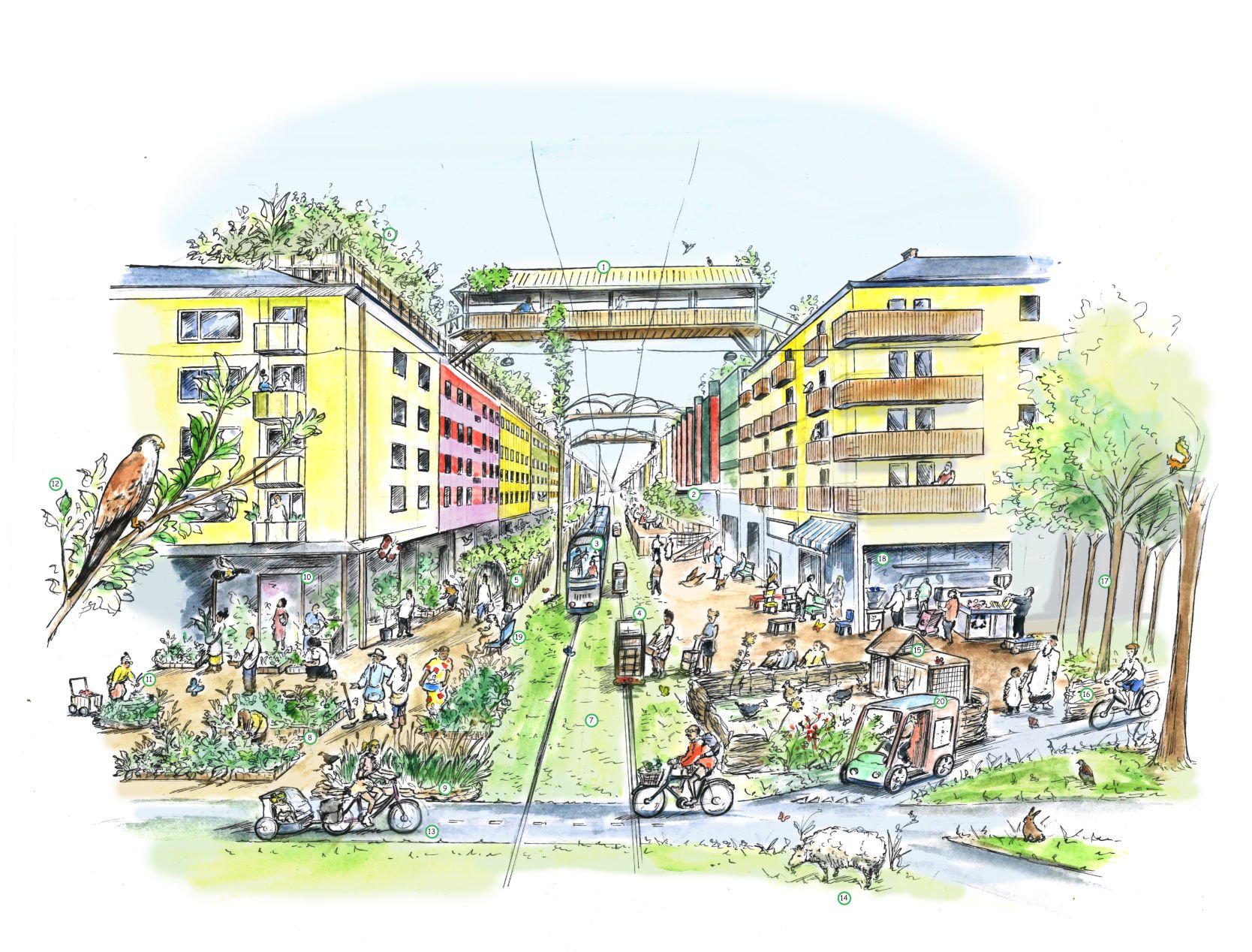
Art by Dustin Jacobus on Story Seed Library
As the organising principle of an anarchist society, free association refers to the ability of each individual to associate (or disassociate) with others based on their interests and needs. Thus, the ability to accomplish anything in anarchy is proportional to the will of free people to get it done, associating on the basis of their will. Groups may form, split, merge, and dissolve. People may come and go. Associations may stretch across time, lasting for hours or decades, and stretch across distance, so that people who have little in common with their neighbours beyond their shared space may be more involved in associations that touch every corner of the globe.
If people want housing, electricity, or anything else, they must organise to build it or associate with those building it. Free association creates a direct relationship between desire, decision, and action: the deciders are the doers, and the doers are the deciders. There is no authority in place to dictate what must or must not be done, nor private property restricting access to common resources. Just groups existing for as long as the people involved find them useful.
Associations may form around the desire to build and maintain roads, housing, or energy infrastructure. These groups are all free to pursue their interests. But interest alone is not enough. To ensure that they can accomplish their goals smoothly, they will need to survey available resources, connect with the necessary supply chains, coordinate with other groups, and consult with those who may be impacted by their efforts. They may federate with other groups of similar interest and develop shared standards: picture long distance rail networks, healthcare associations, or enmeshed energy infrastructure. Through this continuous process of consultation, association, and negotiation, projects are accomplished on a truly horizontal, collaborative basis.
Naturally, there will be conflict. In archist societies, conflict is either suppressed or manifests in really harmful ways. But in a world based on free association, conflict can be embraced because it is approached differently. When it’s not entangled with authority and forced uniformity, conflict and the process of its resolution can be generative. It can help people clarify differences, identify space for difference to coexist, and find mutually beneficial compromises.
Agreements in anarchy are non-binding; there is no authority to impose or forbid actions. This creates a strong incentive to negotiate fairly and find resolutions that are mutually satisfactory. Since the only way to achieve the desired outcome (whether a health clinic or an apartment complex) is through sustained collaboration, people are motivated to resolve conflicts constructively. The absence of authority transforms cooperation from a moral ideal into a practical necessity.
I won’t go into too much detail here, as I am still working on a more exhaustive future critique, but I want to highlight that this anarchist, free association model of organisation is distinct from the archist, direct-democratic model of organisation. The latter is based on the transformation of a group into a static polity, often tied to territory, and invested with the authority to make decisions through formal procedure which are binding upon its individual members. In the name of “the Community,” it enforces the will of the majority upon the minority.
But anarchy rejects the idea that anyone, individual or collective, has a right to command others. There’s no governing authority, nor mechanism for enforcement. When organising on the basis of free association, we don’t start with abstract groupings, we start with real interests. Rather than asking what “the Community” decides, the focus is on respecting individual autonomy, identifying common interests, ever-adjusting mutually satisfactory agreements, and establishing workable compromises.
This is, as I see it, anarchy in action.