What We Get Wrong About Human Nature
This article is an adaptation of a video I originally published on my YouTube channel.
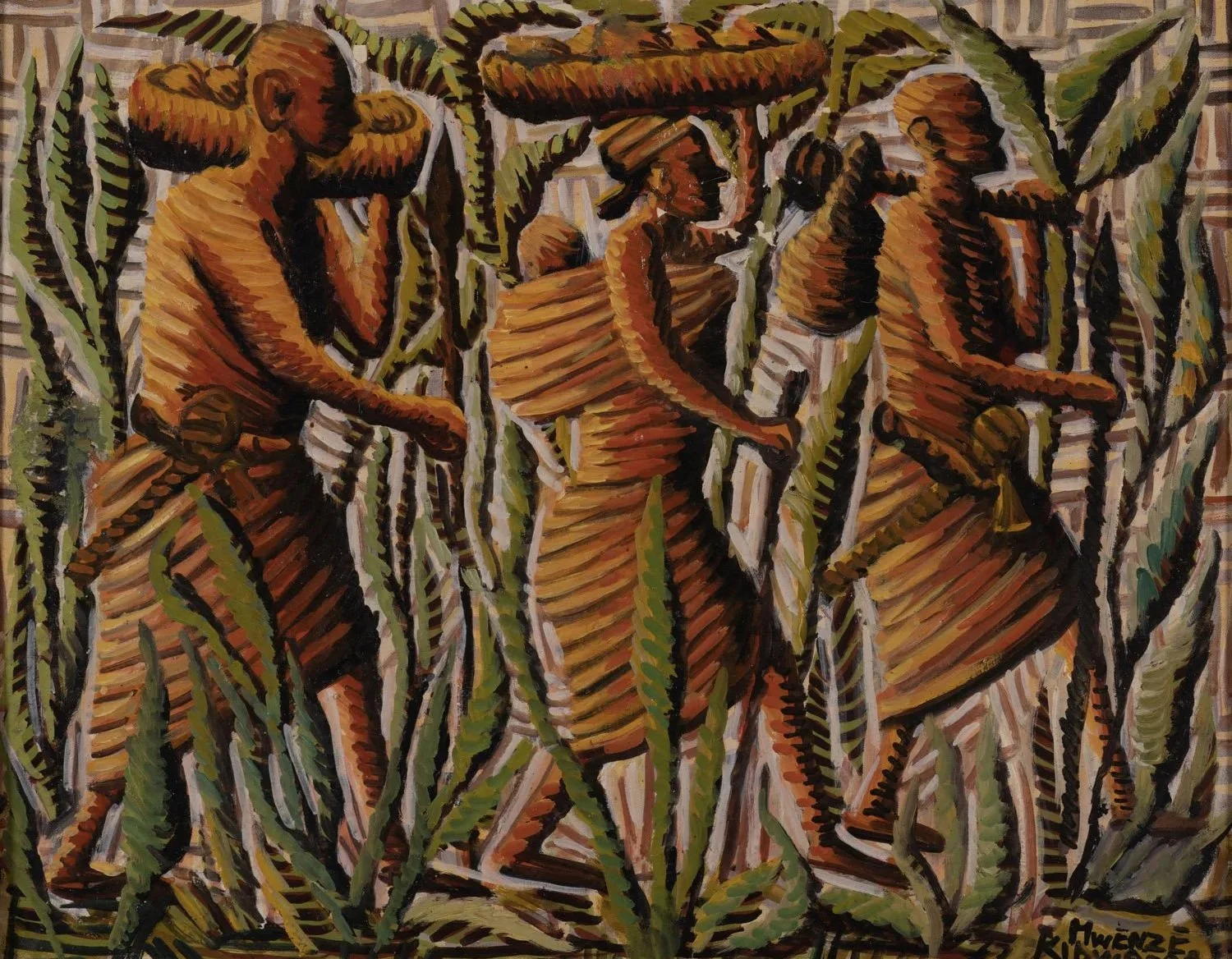
Art by Mwenze Kibwanga
Who are you?
Who am I?
What is the essence of humankind?
What does it mean to be human?
Human nature refers to the fundamental traits of humanity, our most basic and natural ways of thinking, feeling, and acting. Human nature is supposed to be this universal concept that, regardless of nurture, regardless of our environmental, social, political, and psychological conditions, we cannot truly transcend.
I disagree.
There are certain instincts we possess that I might consider universal to humanity—for instance, fear, as a means of basic survival, or disgust, as a means of self-preservation from disease. Yet not everyone experiences fear or disgust. And what we fear or disgust varies considerably from person to person, place to place, culture to culture. Some people fear the depths of the ocean, others fear the peaks of the mountains. Some people are disgusted by even the idea of eating crickets, while for others it’s a healthy treat. The balance of our hormones may also play a role in determining how we behave, but we are not slaves to our hormones. We can and do override our base impulses when the situation calls for it. We also obviously have certain shared needs: things like air, water, food, sleep, and shelter. We want safety, respect, and connection. We seek pleasure. But how we meet those needs varies according to culture, climate, and identity.
If human nature is just “what humans do,” then it is a concept of contradiction. Humans hate and humans love. Humans are violent and humans are peaceful. Humans destroy and humans create. Humans form hierarchies and humans tear them down. But when people bring up human nature, particularly in arguments about the viability of liberation from systems such as capitalism, patriarchy, and the state, they never seem to highlight our noblest features, only our most despicable.
Humanity is defamed by humans themselves. To the misanthropes and their ilk we are all just agents of chaos and wonton environmental destruction. Parasites upon the Earth. They sweep aside the vast antagonisms of class, gender, and race, each socially constructed. They dismiss the distinctions between authoritarian empires and stateless societies, assigning all equal accusation. Capital H U M A N I T Y overrides their examination of the relationships and institutions that have forged our present outcomes.
What exactly constitutes human nature?
Across history and throughout the world, theorists and philosophers have posited different interpretations of the concept. Below is a brief review:
Greek philosophers offered influential accounts of human nature centred on reason and the soul. In Plato's Republic, Socrates describes the human soul as comprising three parts: reason, spirit, and appetite. Aristotle also recognised man as a political animal—able to develop complex communities and systems—and mimetic—meaning able to use his imagination to create artwork.
Elsewhere, Mencius, a Confucian philosopher in the 4th century BCE, argued that human nature was good, with an innate tendency to an ideal state formed under the right conditions. To him, the four beginnings of human nature’s morality were:
a sense of compassion that develops into benevolence,
a sense of shame and disdain that develops into righteousness,
a sense of respect and courtesy that develops into propriety,
and a sense of right and wrong that develops into wisdom.
He believed that the development of virtues came from reflection, and if one didn’t reflect, they wouldn’t develop their moral constitution. According to Mencius, evil came from a lack of reflection and self-development in one’s natural direction. However, another Confucian philosopher in the 3rd century BCE disagreed. Xunzi believed human nature was essentially bad and that learning was the only cure for the destructive and competitive natural ways of humanity. Later on, the legalist framework of human nature would embrace the notion of it being inherently evil. However, unlike Xunzi, they didn’t think even education or self-cultivation could eliminate or alter one’s sick nature.
Echoing many of today’s proponents of capitalism, 3rd century BCE legalist philosopher Han Fei argued that everyone is motivated by their unchanging selfish core to take advantage of whoever they can, especially when they know they can get away with it. Similarly, Emile Durkheim believed humanity to be naturally egoistic and David Hume assumed humans were driven by selfishness and emotions and needed society to be more reasonable. However, Hume also recognised that humans had an innate sense of honour, beauty, and nobility.
In contrast, according to Akan philosophy, what it means to be a person is understood partly as something achieved through responsible participation in family and community life, of course adjusted for one’s level of opportunity. The size or type of contribution matters far less than the practice itself. This position can also be found in the philosophy of Ubuntu, a form of African humanism developed in the 1950s that sees humanity as a quality we owe to each other. It can be neatly summarised by its particularly iconic phrase “I am because we are.”
Yorùbá philosophy recognises that while humanity retains certain activities and needs, the way those activities are carried out and those needs are met are subject to change according to ever-evolving conditions. Karl Marx’s concept of “species-being” was informed by a similarly materialist analysis. He argued against traditional concepts of human nature as incarnating in individuals in favour of human nature forming within social relations. To Marx, human nature wasn’t permanent or universal, but rather always determined in a specific social and historical formation. Humans change their environments and their environments, in turn, change them.
The Rarámuri tribe in the Sierra Madres region of what is now Mexico have traditionally believed in iwígara, the idea that all life-forms are interconnected and share the same breath. Even the land itself and the winds that blow through it share kin. Obviously, the sheer variety of the philosophies of indigenous cultures around the world cannot be painted with one broad brush, but we can find certain similarities across traditions. Many indigenous philosophies have recognised that we cannot be divorced from our environments. There is no separation between human and nature. We are part of the same family. Life can only be viable when humans view nature as kin, all part of the same ecosystem, enhancing and preserving, giving and taking.
Anthropologists refer to this way of seeing the world—with all creatures and things having personhood—as animism. Because many animist traditions treat all beings asrelated, they heavily regulate their interaction with living systems, for the most part, and asterisks indeed apply. That means that while they may fish, hunt, gather, and farm, they do so while remaining cognisant of the sustainability of those systems. They do so in the spirit of reciprocity, not extraction. They live by the principles of what today’s ecological economists would call a steady-state economy—never extract more than ecosystems can regenerate and never waste or pollute more than ecosystems can safely absorb.
The decline of animist ontology has coincided with the rise of capitalism, which has continued to sever our bond with nature, leading to many people embracing the view that human nature is fundamentally destructive. Human presence has come to be seen as a threatening corruption of the natural world. We’ve become estranged from our role as a species of stewards.
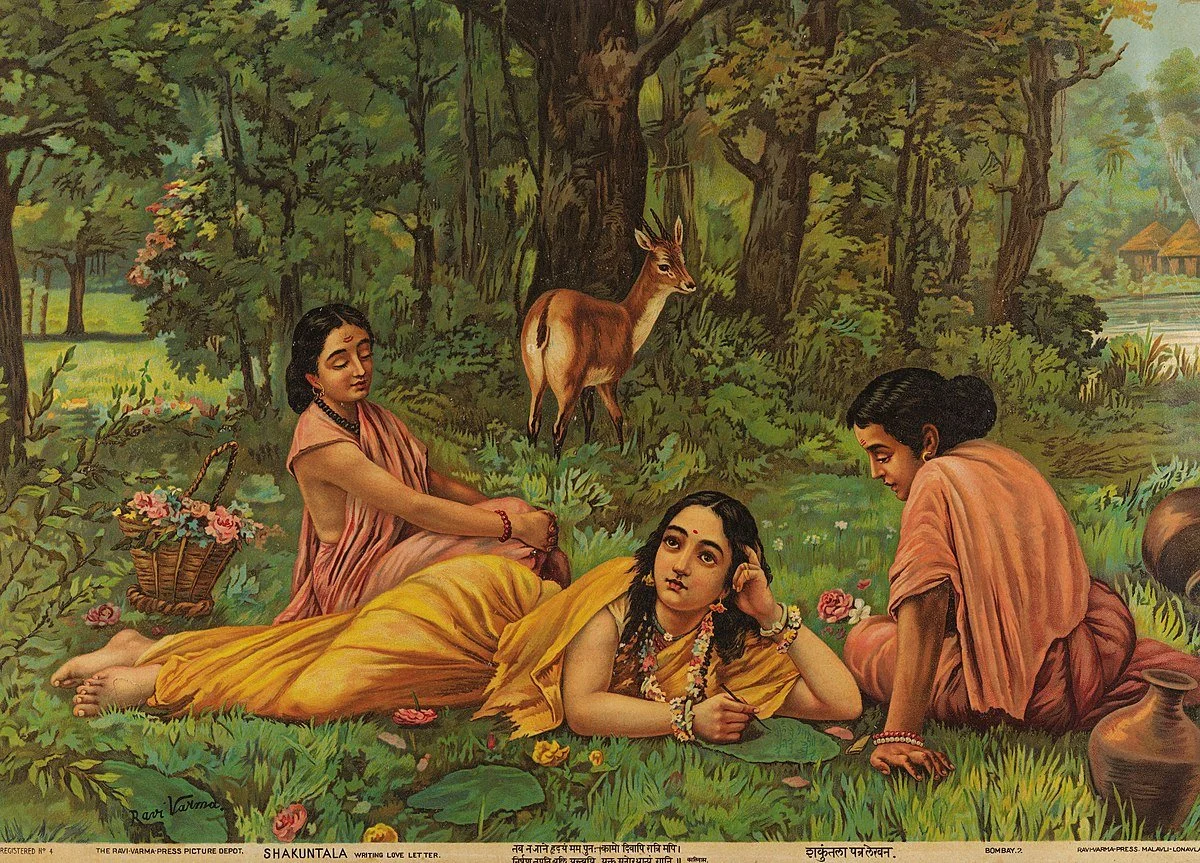
Art by Raja Ravi Varma
We are told that human nature is selfish, greedy, and competitive, but the truth is that we have a range of possibilities encoded in our biology which are expressed according to the culture, institutions, and circumstances we find ourselves in. We can be aggressive or we can be peaceful. We can be patriarchal or we can be egalitarian. We can be cruel or we can be kind. We can be competitive or we can be cooperative. Some claim that war has been a fact of human life basically since we carved the first spear. The existence of recurrent prehistoric warfare is still subject to debate, but the point stands that war is not inevitable. It’s a consequence of specific sociopolitical and economic arrangements and conflicts for which we can and have found other resolutions. Others claim that patriarchy and gerontocracy are baked into human nature. They are, after all, some of the oldest forms of oppression. But societies such as the Hadza exhibit pronounced political egalitarianism, including an absence of chiefs or formal leaders and relatively little material inequality. Such societies are not perfectly egalitarian—gender and age differences remain—but they demonstrate that durable human societies need not be organised around the same forms of hierarchy found elsewhere. There is a yet untapped breadth of cultural attitudes and economic systems which give us good reason to believe that neither patriarchy nor gerontocracy are unassailable.
Is hierarchy human nature? It depends on how it is defined. Expertise and other asymmetries in knowledge and function may always exist in some form or fashion, but hierarchy in the sense that anarchists reject rests on the principle of authority—specifically the social relationship in which one person or group possesses a socially established right above others to issue commands that those others are obligated to obey by virtue of their position. Anarchists further reject private property insofar as it institutionalises socially recognised rights to control and exclude others from resources beyond mere use or possession, creating relations of dependence, exploitation, and domination. A hierarchy thus refers to when such differentiated rights and obligations are durably institutionalised into superior and subordinate social roles. These may arise through political authority, as between ruler and subject, or through specific property relations, such as capitalist and worker, master and slave, or landlord and tenant.
We have reason to believe that humans have cooperatively self-organised their lives and resources for thousands of years without rulers or proprietors. The institutions of the state and private property have historically organised and reproduced hierarchical social relations, but we are certainly capable of both authoritarian and anti-authoritarian social arrangements. Avoiding authoritarianism and maintaining egalitarianism relies on a conscious recognition of the material conditions which contribute to that egalitarian arrangement and an anarchic determination to resist social arrangements that grant some people rights over the resources, lives, and labour of others.
Peaceful, egalitarian societies have existed alongside patriarchal warmongers throughout our history. Which traits predominate in our society is determined by what our material conditions incentivise. Everyone can practice cooperative behaviour when they have the need or desire to do so. Natural disasters frequently generate substantial cooperation, solidarity, and spontaneous mutual assistance, although these responses can coexist with competition and conflict. Without our capacity for altruism, built upon the evolutionary foundation of mutual aid and cooperative child rearing, we would not be human.
That isn’t to deny the role of struggle and conflict, but it must be stressed that the primacy of greed, selfishness, and competition within our societies are an outcome of specific social arrangements and material conditions. Whether acting in one’s self-interest to pursue personal well-being produces cooperation or oppression is determined by the systems an individual is embedded within. As British philosopher Andrew Collier wrote in Marx: A Beginner’s Guide:
“To look at people in capitalist society and conclude that human nature is egoism, is like looking at people in a factory where pollution is destroying their lungs and saying that it is human nature to cough.”
Ultimately, the conditions in our society are what shapes what “human nature” is, how it develops, and what aspects of it are made manifest. Egalitarian societies and hierarchical societies will shape people in radically different ways. Both are within the realm of future possibilities. We know that human beings have the ability to think and learn for ourselves, that we are social creatures capable of organising ourselves without hierarchy, and that we can recognise and oppose injustice. With these three characteristics in mind, by recognising and opposing the conditions that favour domination and proposing horizontal social arrangements to actively reshape our powers, drives, and consciousness, we can bring forth our liberation.
Human nature is a mythology of social control weaponised to simplify our complexity and reify the way that present society is organised, whether via divine right, original sin, or sociobiology. Human nature is a lazy mental shortcut to avoid confronting preconceived notions, prejudices, and assumptions. Human nature is an effective propaganda tool limiting our recognition of our possibilities and serving the constriction of our education and imagination.
Anarchists are accused of demanding too much from human nature. I think it’s quite the opposite. We’re told that without the state, the world would descend into chaos. “The state protects us from bad people.” No. As Kropotkin rightfully argued in Are We Good Enough, “both rulers and ruled are spoiled by authority” and “both exploiters and exploited are spoiled by exploitation.” The powerful are corrupted by power and the powerless become either servile or rebellious. Even if human nature were as wicked as some say it is, providing avenues to dominate others would be a terrible mistake. We don’t need perfect people to spark a social revolution, we just need people willing to question and transform our relationships, technologies, cultures, education, and economies in an anarchic manner. It won’t happen overnight, nor will it entirely eliminate conflict between people, but slowly and surely, fuelled by the indomitable human spirit, the social revolution could bring out the untapped potential of freedom embedded within our so-called human nature.
We have not arrived at the end of history.
Change is not only possible, it is inevitable.
All power to all the people.
Peace.